

United States
What US Consumers Think About Laser Eye Surgery and ICL
Findings from The Future of Refractive Surgery, a STAAR Surgical survey of 1,800 glasses and contact lens wearers in the United States.
In STAAR Surgical’s Future of Refractive Surgery survey of 1,800 glasses and contact lens wearers in the United States, 86% want to be free of glasses and contact lenses, yet only 38% indicate they are open to laser vision correction. 61% would prefer a reversible procedure.
| 1,800 | 86% | 38% | 61% |
| glasses and contact lens wearers in the United States | want to be free of glasses and contact lenses | are open to laser vision correction | would prefer a reversible procedure |
Source: STAAR Consumer Survey, US (n=1,800), August 2025.
Who took part in the US survey?
STAAR Surgical surveyed 1,800 adults in the United States who currently wear glasses and/or contact lenses, in August 2025. 52% of respondents were female, and 90% were aged 21-45.
Source: STAAR Consumer Survey, US (n=1,800), August 2025.
How do US consumers feel about laser eye surgery?
Most US respondents want to be free of glasses and contact lenses (86%), yet only 38% are open to laser vision correction.
The Gap
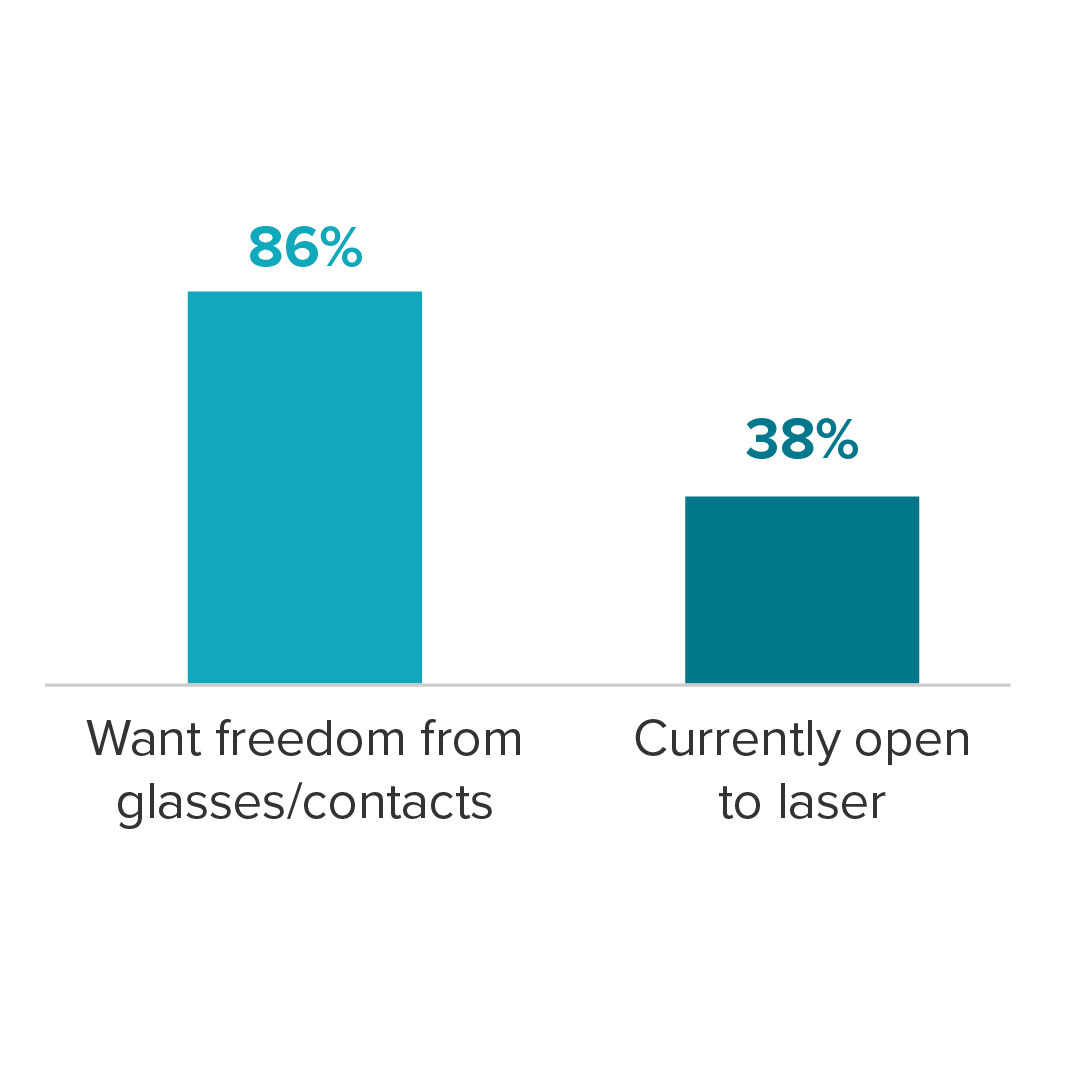
86% of US respondents want freedom from glasses and contacts; 38% are currently open to laser.
Table: The Gap
| % | |
| Want freedom from glasses/contacts | 86% |
| Currently open to laser | 38% |
Source: STAAR Consumer Survey, US (n=1,800), August 2025.
Do US consumers want a reversible vision correction procedure?
Most do: 61% of US respondents would prefer a reversible procedure to give them peace of mind and future options.
Source: STAAR Consumer Survey, US (n=1,800), August 2025.
What holds US consumers back from vision correction surgery?
Asked to select the one factor holding them back the most from a vision correction procedure, more than half of US respondents shared that non-cost concerns were their biggest barriers, led by safety concerns (27%) and fears (21%).
What’s Holding Them Back?
Asked to select one factor holding them back the most from a vision correction procedure, more than half of respondents shared that non-cost concerns were their biggest barriers.
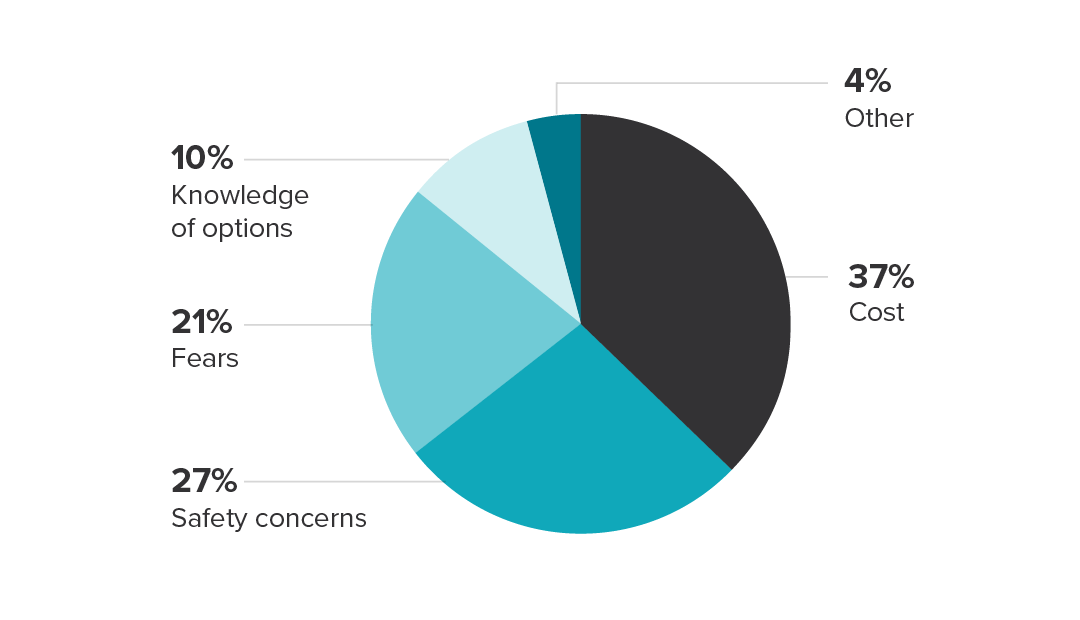
More than half of US respondents say non-cost concerns are their biggest barriers to a vision correction procedure.
Table: What’s Holding Them Back?
| % | |
| Safety concerns | 27% |
| Fears | 21% |
| Knowledge of options | 10% |
| Other | 4% |
| Cost | 37% |
Source: STAAR Consumer Survey, US (n=1,800), August 2025.
How aware are US consumers of ICL?
19% of US respondents are aware of the implantable Collamer lens (ICL) as a procedure (unaided, multi-select), and 31% say they have heard of implantable or permanent contact lenses when asked directly. By comparison, 79% are aware of LASIK.
Source: STAAR Consumer Survey, US (n=1,800), August 2025. Awareness: multi-select (19.3%); direct (30.7%).
Where do US consumers look for information about vision correction?
Eye care professionals remain the top-cited source at 66.8%. US consumers also say they would consult search engines (53.5%), friends and family (37.1%), YouTube (34.1%) and AI tools such as ChatGPT (25.5%) to research vision correction surgery.
Source: STAAR Consumer Survey, US (n=1,800), August 2025.
What procedures are US surgeons performing for patients with higher prescriptions?
In practice pattern research conducted with AECOS (1,882 patient records across 19 refractive practices), ICL was the most-performed refractive procedure (72%) among patients at -8.0 D and above.
Source: STAAR / AECOS practice pattern research, June 2024.
Explore related findings
 Global findings: Key findings and FAQ
About the research
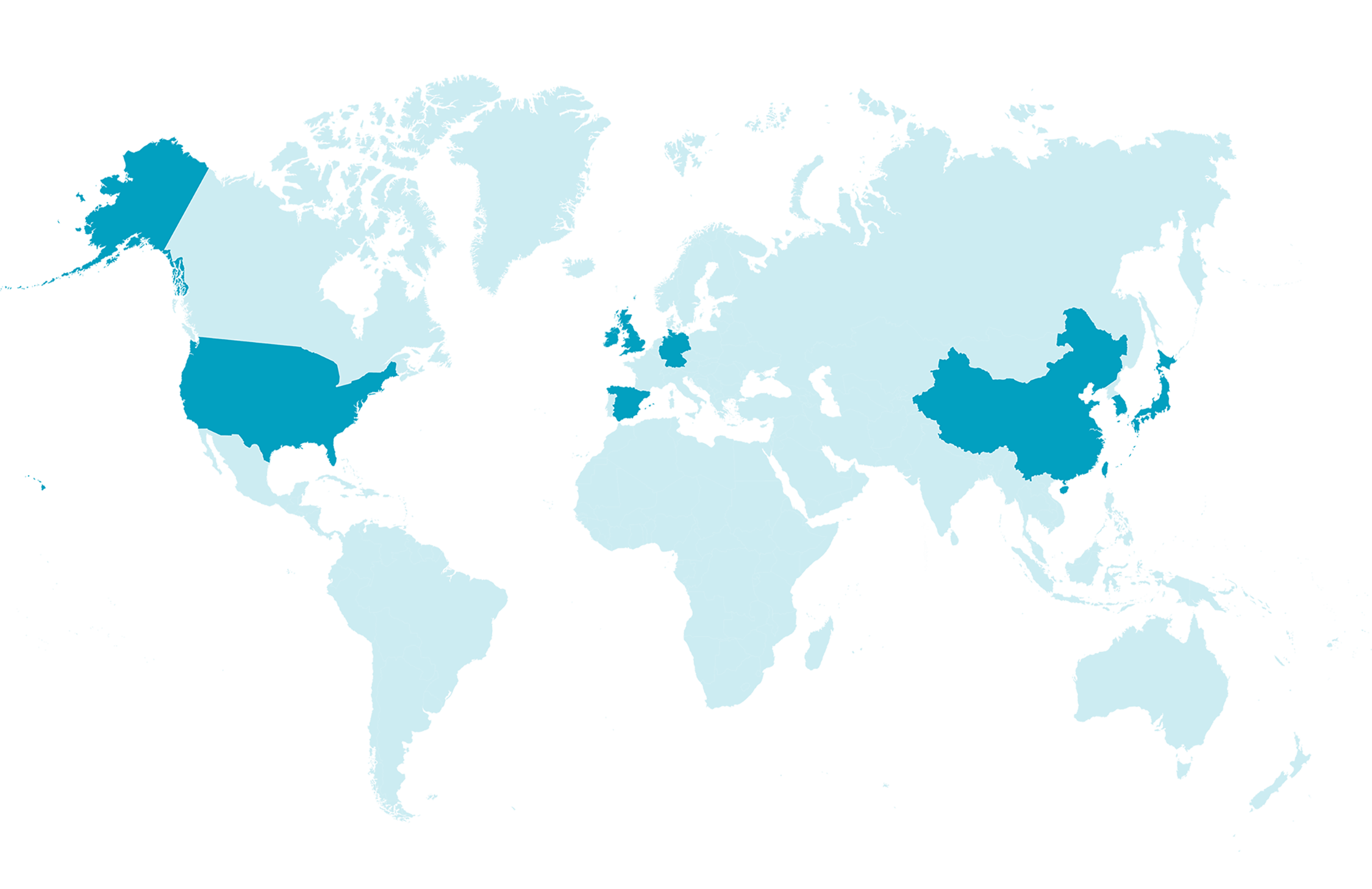
The Future of Refractive Surgery is a consumer survey sponsored by STAAR Surgical among 7,800 current glasses and/or contact lens wearers aged 21-65 in seven markets: the United States (n=1,800), the United Kingdom and Ireland, Germany, Spain, China, Japan and South Korea (n=1,000 each). Fieldwork ran from March 2025 to May 2026. The US survey was fielded in August 2025.
Suggested citation: STAAR Surgical. The Future of Refractive Surgery: United States Findings. 2026. staar.com/future-of-refractive-surgery/united-states
Published [Month 2026]
Last updated [date]
[MLR Project Number]