

China
What Chinese Consumers Think About Laser Eye Surgery and ICL
Findings from The Future of Refractive Surgery, a STAAR Surgical survey of 1,000 glasses and contact lens wearers in China.
In STAAR Surgical’s Future of Refractive Surgery survey of 1,000 glasses and contact lens wearers in China, 94% want to be free of glasses and contact lenses, yet only 32% register as open to laser vision correction; 55% are not open.1 90% would be interested in an alternative to laser, and 86% would prefer a reversible procedure.
| 1,000 | 55% | 90% | 86% |
| glasses and contact lens wearers in China | are not open to laser vision correction1 | are interested in an alternative to laser | would prefer a reversible procedure |
1 Sentiment split (Not open / Undecided / Open) is calculated as each category’s share of total selections in the multi-select question (“What do you think of Laser Vision Correction Surgery?”). Source: STAAR Consumer Survey, China (n=1,000), May 2026.
Who took part in the Chinese survey?
STAAR Surgical surveyed 1,000 adults in China who currently wear glasses and/or contact lenses, in May 2026. 55% of respondents were female, and 94% were aged 21-45.
Source: STAAR Consumer Survey, China (n=1,000), May 2026.
How do Chinese consumers feel about laser eye surgery?
Nearly all Chinese respondents want to be free of glasses and contact lenses (94%), but far fewer are open to laser: 55% are not open to laser vision correction, 13% are undecided and 32% are open.1
Laser Vision Correction Sentiment in China
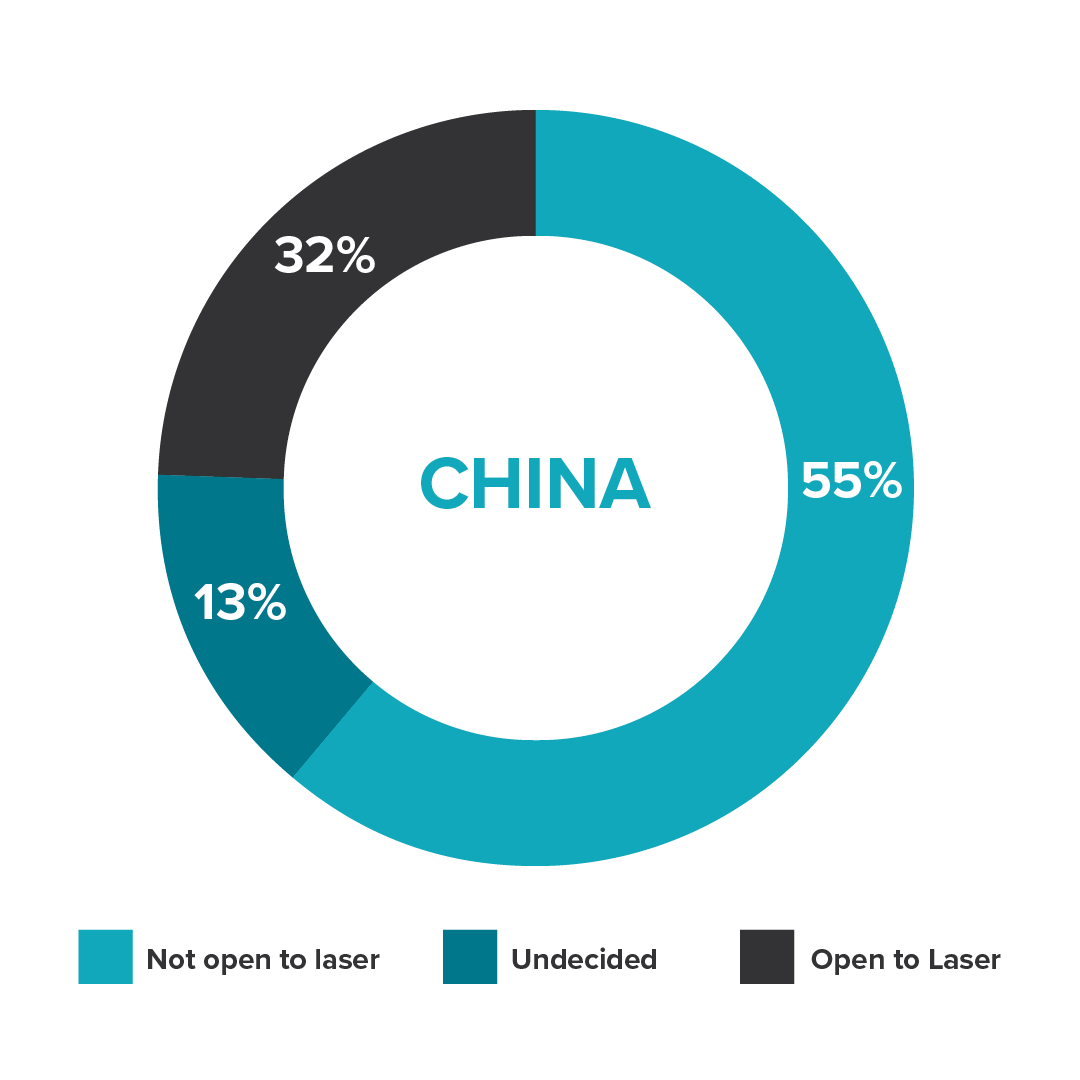
55% of Chinese respondents are not open to laser, while 32% are open.
Table: Laser Vision Correction Sentiment in China
| Laser sentiment | China |
| Not open to laser | 55% |
| Undecided | 13% |
| Open to Laser | 32% |
1 Sentiment split (Not open / Undecided / Open) is calculated as each category’s share of total selections in the multi-select question (“What do you think of Laser Vision Correction Surgery?”).
Source: STAAR Consumer Survey, China (n=1,000), May 2026.
Are Chinese consumers open to alternatives to laser eye surgery?
Yes: 90% of Chinese respondents would be interested in an alternative to laser that gets them out of glasses and contact lenses, and 86% would prefer a reversible procedure to give them peace of mind and future options.
Openness to Alternatives
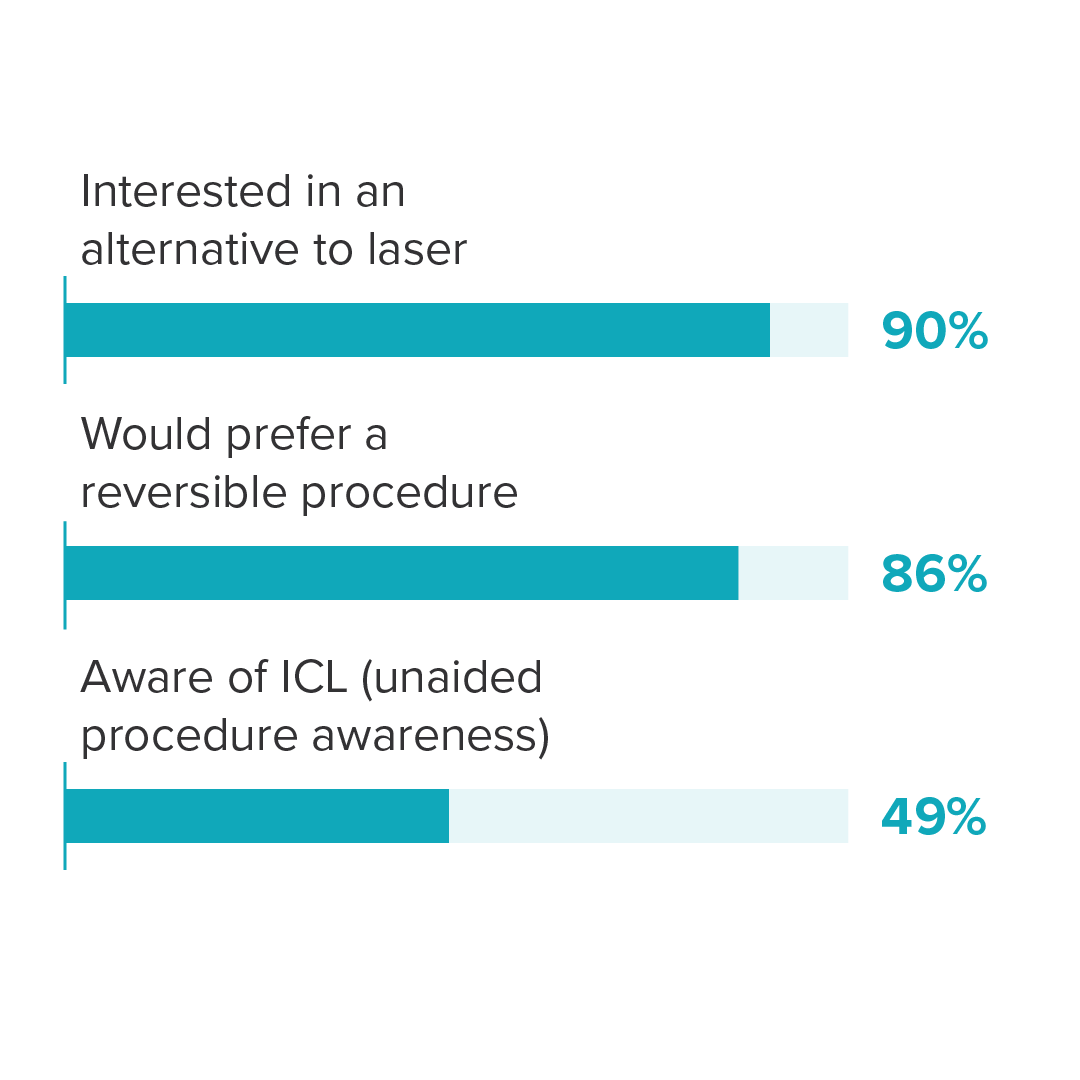
90% of Chinese respondents are interested in an alternative to laser, and 86% would prefer a reversible procedure. 49% are aware of ICL unaided.
Table: Openness to Alternatives
| % | |
| Interested in an alternative to laser | 90% |
| Would prefer a reversible procedure | 86% |
| Aware of ICL (unaided procedure awareness | 49% |
Source: STAAR Consumer Survey, China (n=1,000), May 2026.
What holds Chinese consumers back from vision correction surgery?
Safety is the most-cited barrier in China: 76% of respondents rate concerns about safety or potential complications 4 or 5 on a 5-point scale as something holding them back. Uncertainty about long-term outcomes (74%) and concern about pain or discomfort (73%) follow closely, while difficulty justifying the expense ranks lower (51%).
What’s Holding Them Back: Safety, Uncertainty, and Fear Outrank Cost
Share of respondents rating each factor 4 or 5 of 5 as holding them back from a vision correction procedure:
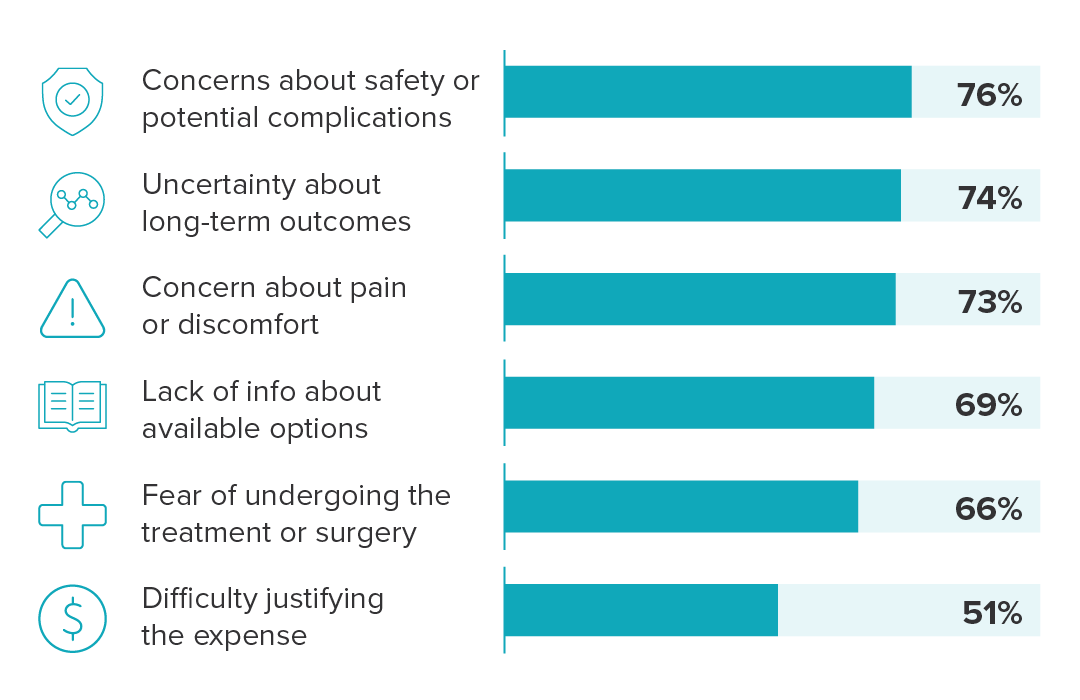
Safety concerns lead the barriers in China at 76%; justifying the expense ranks lower (51%).
Table: What’s Holding Them Back: Safety, Uncertainty, and Fear Outrank Cost
| % | |
| Concerns about safety or potential complications | 76% |
| Uncertainty about long-term outcomes | 74% |
| Concern about pain or discomfort | 73% |
| Lack of info about available options | 69% |
| Fear of undergoing the treatment or surgery | 66% |
| Difficulty justifying the expense | 51% |
Source: STAAR Consumer Survey, China (n=1,000), May 2026.
How aware are Chinese consumers of ICL?
49% of Chinese respondents are aware of the implantable Collamer lens (ICL) unaided, and 60% said they had heard of implantable or permanent contact lenses when asked directly. Even so, 69% cite a lack of information about available options as a barrier.
Source: STAAR Consumer Survey, China (n=1,000), May 2026. Awareness: multi-select (49%); direct question (60%).
How common is high myopia in China?
Market Scope estimates that 95.5 million people in China live with high myopia (beyond -6D). China is the largest phakic IOL market in the world: Market Scope estimates that more ICL procedures were performed in China in 2024 than in all other countries combined.
Source: Market Scope, 2025 Refractive Surgery Market Report.
Where do Chinese consumers look for information about vision correction?
Ophthalmologists come first: 83.5% of Chinese respondents cite them as a source they would consult. Many also turn to social and digital channels, including TikTok (46.0%), AI tools such as ChatGPT and DeepSeek (39.8%), WeChat (27.9%) and Xiaohongshu (25.9%).
Source: STAAR Consumer Survey, China (n=1,000), May 2026.
Explore related findings
 |  |  |  |
| Asia-Pacific: China, Japan, South Korea | Japan: Country Findings | South Korea: Country Findings | Global Findings: Key Findings and FAQ |
About the research
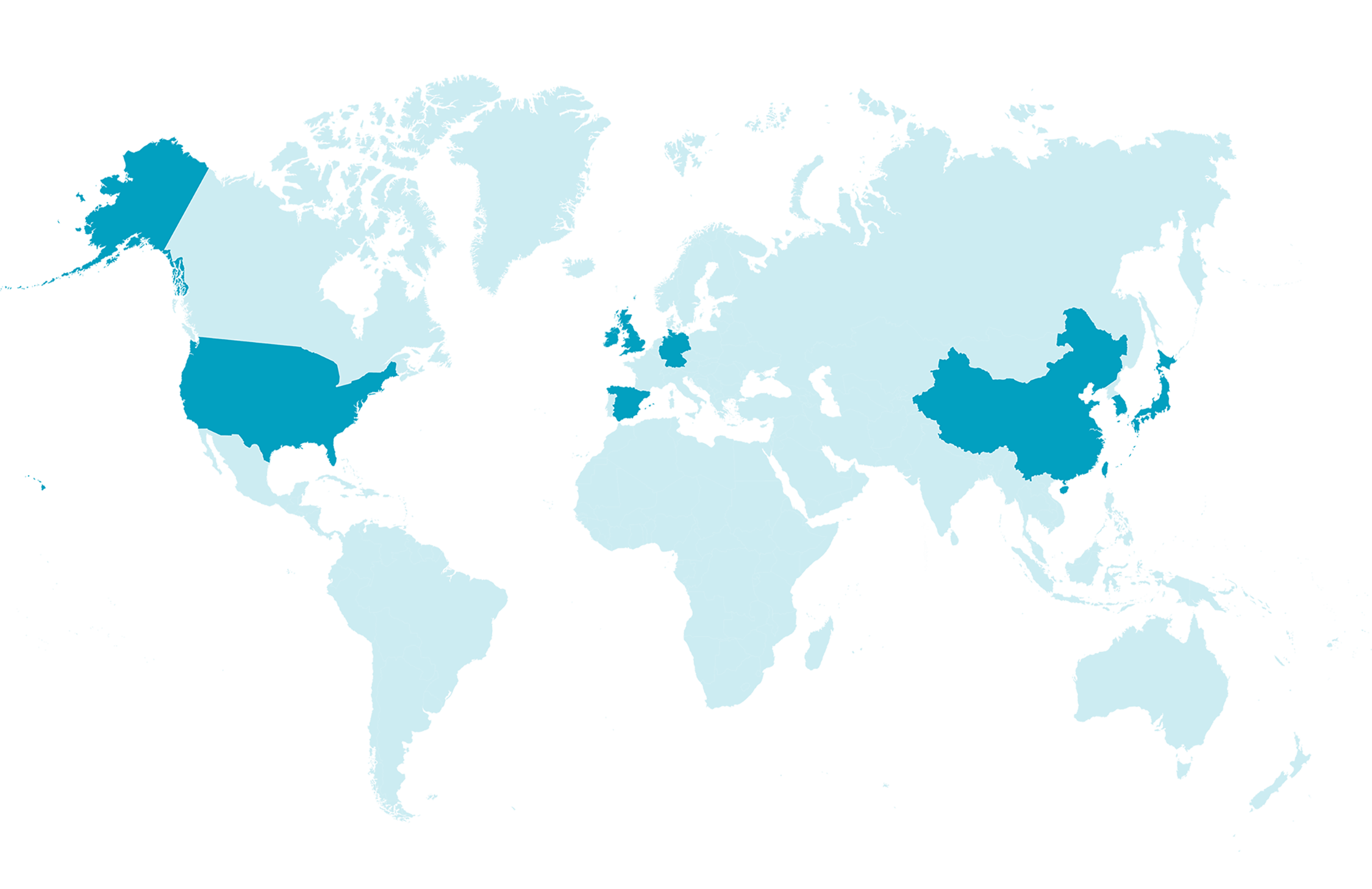
The Future of Refractive Surgery is a consumer survey sponsored by STAAR Surgical among 7,800 current glasses and/or contact lens wearers aged 21-65 in seven markets: the United States (n=1,800), the United Kingdom and Ireland, Germany, Spain, China, Japan and South Korea (n=1,000 each). Fieldwork ran from March 2025 to May 2026. The China survey was fielded in May 2026.
Suggested citation: STAAR Surgical. The Future of Refractive Surgery: China Findings. 2026. staar.com/future-of-refractive-surgery/china
Published [Month 2026]
Last updated [date]
[MLR Project Number]